Japan’s currency markets sent a clear message after the Bank of Japan’s latest policy move. Even with interest rates raised to their highest point since 1995, the yen weakened, signaling that investors wanted firmer guidance on what comes next.
The decision highlighted the growing gap between policy action and market expectations, while placing Governor Kazuo Ueda’s strategy under sharp focus.
BOJ Pushes Rates Higher, Signals More Ahead
The Bank of Japan increased its benchmark interest rate by 25 basis points to 0.75%, marking the highest level in 30 years. The move was unanimous and fully anticipated by all 50 economists surveyed by Bloomberg. Officials pointed to rising confidence in the economic outlook, steady wage growth, and easing concerns tied to US tariffs.
The policy statement stressed that borrowing costs will continue to rise if projections hold. Underlying inflation, according to the BOJ, is still climbing at a moderate pace.
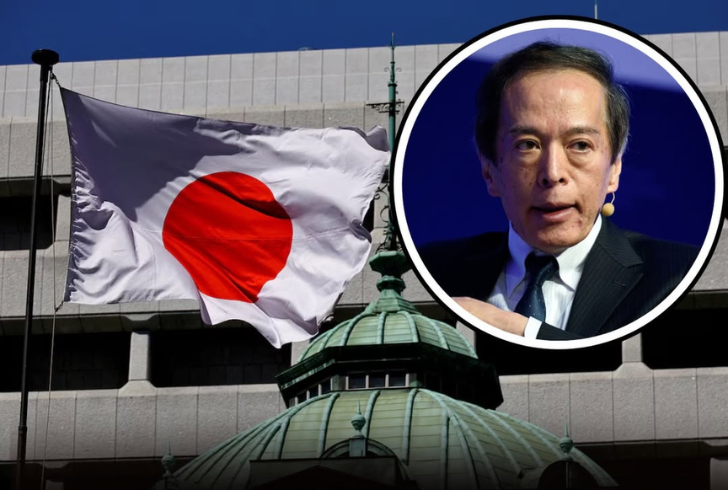
Instagram | @crypto.asad | The Bank of Japan raises rates to 0.75% while signaling more hikes as the economy strengthens.
Governor Kazuo Ueda reinforced that stance during his press briefing, saying:
“We’ll keep making appropriate decisions at each policy meeting. The pace at which we adjust our rate will depend on the state of the economy and prices.”
While the bank estimates the neutral rate sits somewhere between 1% and 2.5%, Ueda maintained that pinpointing an exact level remains difficult. He added that the current rate still falls below the lower end of that range.
Yen Reaction Shows Market Disappointment
Despite the hawkish signal, the yen weakened shortly after the announcement. It slid past 157.10 per dollar following Ueda’s remarks, compared with levels near 155.80 before the decision. The response suggested traders expected clearer language on the speed and scale of future hikes.
Masamichi Adachi, chief Japan economist at UBS Securities and a former BOJ official, summarized the mood:
“The market was looking for clear hawkish signals. Of course, the BOJ said that Japan’s real rate is significantly low and that suggests more hikes to come, but Ueda’s comments alone almost sounded like the rate hike cycle could end soon.”
Meanwhile, Japanese government bond yields climbed. The 10-year yield moved above 2%, reaching its highest level since 1999. Equity markets reacted calmly, with the Nikkei 225 closing up 1% earlier in the session.
Inflation, Wages, and the Shift From Decades of Low Prices
The rate hike reflects a broader shift in Japan’s economy. Inflation is becoming more entrenched after decades of subdued price growth following the early 1990s asset bubble collapse. Data released Friday showed a key consumer price index rising 3% in November, keeping inflation at or above the BOJ’s 2% target for 44 straight months.
Wage trends continue to support the central bank’s confidence. Labor unions have set pay targets for upcoming annual talks that mirror last year’s demands, which resulted in historic wage increases. Officials also cited evidence that President Donald Trump’s tariffs are not dealing a major blow to Japan’s economy.
Former BOJ executive director Kazuo Momma offered a timeline aligned with market expectations, saying on Bloomberg TV:
“I think the BOJ will continue raising rates at a pace of around once every six months or so. Maybe two rate hikes in 2026 and one more in 2027, reaching the level of 1.5%.”
Politics, Global Policy Gaps, and Yen Pressure

Instagram | @mrkt_ai | Political shifts under PM Takaichi initially clouded Ueda’s path toward policy normalization.
Political dynamics also shaped the decision. The rise of Prime Minister Sanae Takaichi in October initially raised doubts about how far Ueda could go with policy normalization. Still, persistent inflation and a weak yen made it difficult for the government to oppose the hike. Nearly 98% of BOJ watchers cited yen depreciation as the main reason Takaichi refrained from pushing back.
A weaker currency risks lifting import costs and adding pressure on households, a sensitive issue after voter frustration over living costs hurt the ruling Liberal Democratic Party in recent elections.
Ueda emphasized coordination with fiscal policy, referencing the 2013 joint statement with the government aimed at achieving stable 2% inflation. He noted that accommodative conditions will remain in place to support growth, calling the current phase the “final stage” of long-running efforts that began under former governor Haruhiko Kuroda.
On the global stage, Japan stands apart. The BOJ is the only major central bank raising rates this year. The Federal Reserve cut rates for the third time recently, projecting just one cut in 2026. Even after Friday’s move, Japan’s interest rate remains below its inflation rate, while US borrowing costs exceed price growth, showing a slow convergence between the two economies.
BOJ Outlook and Market Expectations Ahead
This was the first unanimous rate hike under Ueda after internal divisions surfaced in prior meetings. Still, dissent lingered around inflation forecasts. Board members Naoki Tamura and Hajime Takata objected to how cautiously the price outlook was framed, arguing inflation could align with targets sooner than projected.
The decision followed clear signals from Ueda earlier this month, a strategy likely shaped by last year’s surprise hike in July 2024 that unsettled global markets. The yen’s slide toward 160 per dollar in recent weeks also added urgency, prompting warnings from financial authorities.
The Bank of Japan has set a firm direction but left key questions unanswered. Rate hikes are underway, inflation is holding above target, and wage momentum remains solid. Still, the yen’s reaction shows that markets want sharper guidance on how far and how fast policy tightening will go. As Ueda balances inflation control, political realities, and global divergence, communication may matter just as much as the next rate move.