
Regular exercise has become a key part of daily life for many homeowners. Staying active supports long-term health, improves energy levels, and helps maintain balance in busy routines. However, fitness choices often involve financial trade-offs. Mortgage payments, household expenses, and other obligations make each investment worth careful consideration.
Both a home gym and a gym membership require money, space, and commitment. The better choice usually depends on lifestyle, habits, and how often workouts take place. Some households prefer the convenience of home workouts, while others rely on gym structure for motivation.
Understanding the costs, lifestyle impact, and long-term value of each option helps determine which one fits daily routines best.
Financial Reality of Building a Home Gym
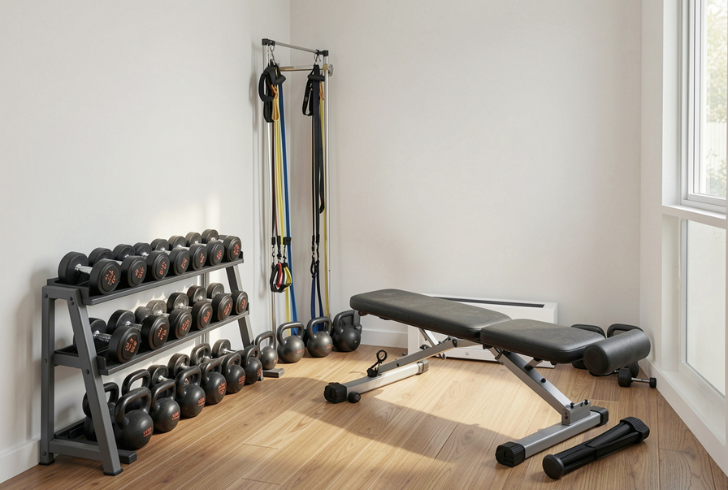
Freepik | High upfront costs for home gyms eventually balance out as they can outperform expensive annual memberships.
Creating a dedicated workout space at home usually requires a noticeable upfront expense. According to Angi, a typical home gym setup ranges between $2,150 and $13,750, with an average cost of about $7,750.
The advantage appears over time. Once equipment is installed, the cost per workout gradually decreases.
Ryan Wright, real estate investor and CEO of The Investor’s Edge in Salt Lake City, explains the financial break-even point:
“While it depends on what you paid for your gym and how often you exercise, the breakeven point usually occurs within several years when compared to a $150 monthly or $1,800 annual gym membership.”
Lower-cost setups shorten that timeline. A basic home gym costing $2,150 to $3,600 may reach its break-even point within 12 to 24 months, depending on how often the equipment is used.
Another major factor involves household usage. When several family members share the equipment, the value increases significantly.
Emily Mackie, interior designer and founder of Inspired Interiors in Winnetka, Illinois, highlights this benefit:
“At my house, five people use the gym. Therefore, building it was definitely much more affordable than gym memberships.”
Still, the initial expense requires careful consideration. That money could also support other financial goals such as paying down debt, building an emergency fund and investing for retirement.
From a tax perspective, home gym costs are usually considered nondeductible personal expenses for W-2 employees. An exception may apply for some self-employed individuals if the space is used for business activities.
Consistency remains the deciding factor. Wright notes that the benefits appear when homeowners remove obstacles and build a routine around the space.
“At the end of the day, what matters most is that you (and others in your household) use your home gym regularly. Those who remove as many barriers to use as possible and create habits surrounding their home gym will generate the most benefits from it.”
Expenses Beyond the Initial Setup
A home gym often appears like a one-time purchase. In reality, several ongoing costs may surface over time.
Some of the common hidden expenses include:
1. Maintenance and repairs for equipment
2. Upgrades or additional gear as fitness routines change
3. Higher utility usage, especially for lighting or climate control
4. Lost square footage, which can carry real value in certain housing markets
Space remains one of the biggest trade-offs. A dedicated gym occupies space that could otherwise be used as a bedroom, office, or entertainment space.
On the other hand, gym memberships have their own financial considerations. Many boutique fitness studios now charge $200 to $400 per month. Smaller classes and personalized coaching often justify the price, but costs rise quickly when memberships extend across multiple studios.
Lifestyle Advantages of a Home Gym
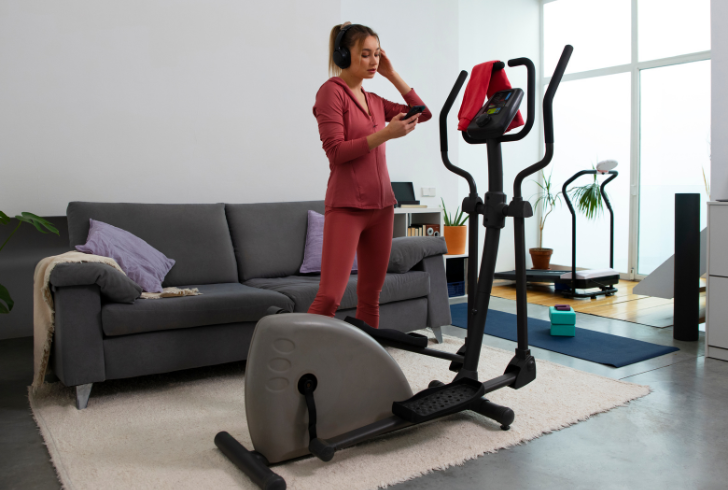
Freepik | Home fitness transforms a chore into a convenience by removing the barrier of a commute.
While financial calculations matter, lifestyle convenience often drives the decision.
A home gym eliminates commuting time and offers immediate access to workouts. This flexibility works particularly well for people with unpredictable schedules.
For remote workers, a short break can become an efficient workout session.
Emily Mackie explains the time advantage:
“If you work remotely, you may be able to take a 45-minute break to work out in your home gym. You won’t have to take two hours to drive to the gym, exercise, and return home.”
Parents may also appreciate the flexibility. A workout can happen while children play nearby or watch a movie. This removes the need to arrange childcare just to visit a gym.
These small conveniences often increase workout consistency, which ultimately determines whether fitness investments deliver real value.
Why Many People Prefer Fitness Centers
Despite the convenience of home workouts, traditional gyms continue to offer benefits that are difficult to duplicate.
Fitness centers provide a structured environment built specifically for exercise. The atmosphere encourages discipline and regularity. Many people feel more focused in a dedicated space.
Key benefits of gym memberships include:
- Community and social interaction
- Accountability through classes or trainers
- Access to specialized equipment
- Motivation from a structured training environment
For those who value group energy or guided workouts, gyms can enhance motivation.
How a Home Gym Influences Property Value
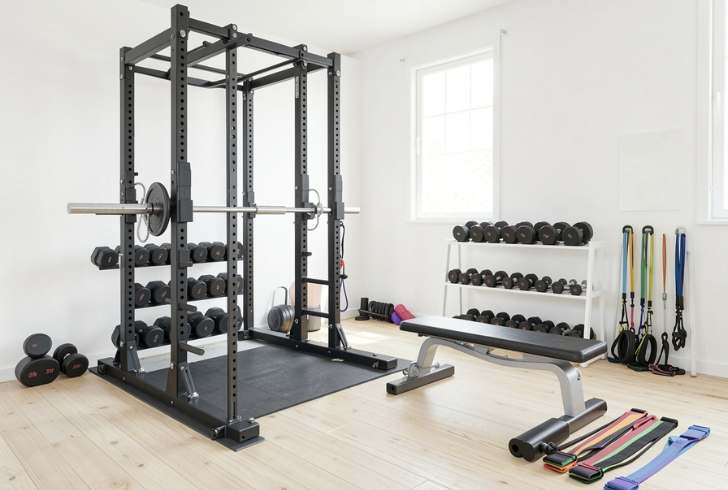
Freepik | Home gyms offer more marketable appeal than actual appraised value, serving as a "lifestyle bonus" for buyers.
A dedicated home gym rarely increases a home’s appraised value directly. According to Ryan Wright, appraisers usually treat the space as standard square footage rather than a specialized upgrade.
“Most see it as general square footage unless it’s designed like a standard bedroom or office.”
However, a fitness space can improve a property’s appeal, especially in suburban or luxury markets where flexible lifestyle areas are valued.
Design flexibility is important. Overly customized gyms may reduce resale adaptability.
Wright emphasizes balance:
“Gyms that have been staged but are spatially and structurally poised for easy transformation tend to offer that sweet spot between visual attractiveness and longer-term value.”
Equipment That Works in Most Homes
Home gyms are most effective when built with versatile equipment. Space-saving tools allow for multiple training styles.
Useful equipment includes adjustable dumbbells, benches, resistance bands, kettlebells, and compact racks.
Compound-focused equipment often retains better value and reduces the need for upgrades. This improves long-term efficiency.
The choice between a home gym and a gym membership depends on routine and financial priorities. Home gyms offer convenience and long-term utility. Gyms provide structure and social motivation.
Both require consistency, and the best option is the one that fits naturally into daily habits.