
Banking across state lines has changed dramatically since the 1990s. The rules governing it have not always kept pace. The Federal Deposit Insurance Corporation wants to close part of that gap. The FDIC has proposed a new rule designed to give out-of-state state banks the same treatment as national banks when host state laws come into play.
The FDIC Board considered the State Bank Parity proposal at its September 17, 2026 meeting. The proposal was scheduled for publication in the Federal Register on September 22. It would amend 12 CFR Part 331 and clarify how Section 24(j) of the Federal Deposit Insurance Act applies to modern interstate banking.
Current statutory language focuses heavily on branches. The FDIC says applying that wording too narrowly could leave digital-first state banks with less protection than national banks offering the same services.
The FDIC Wants Banking Rules to Catch Up With Online Banking

Mark / Unsplash / The dispute starts with America's dual banking system. Banks can receive charters from either a state government or the federal government, creating state-chartered banks and national banks.
Congress has repeatedly tried to maintain competitive balance between the two systems. One important step came through the Riegle-Neal Interstate Banking and Branching Efficiency Act of 1994 and later amendments dealing with interstate banking.
Section 24(j) of the Federal Deposit Insurance Act addresses how host state laws apply to branches of out-of-state state banks. In broad terms, those laws apply only to the same extent that they would apply to an out-of-state national bank's branch.
The FDIC's proposal would extend that parity more clearly to services provided without a physical branch. If a host state law does not apply to an out-of-state national bank providing a particular service, the proposal says that law similarly would not apply to an out-of-state state bank providing the service.
A bank can have thousands of customers in another state without operating a traditional branch there. The FDIC argues that forcing a state bank to establish a branch just to receive legal treatment comparable with a national bank would make little practical sense.
The agency describes that potential outcome as inconsistent with the structure and purpose of Section 24(j). It could also put state banks at a competitive disadvantage simply because of how customers access their services.
Under the proposed wording, services provided in a host state would receive the same treatment regardless of the physical channel used. The legal question would focus more on the service and the bank involved, rather than the presence of a brick-and-mortar location.
An Illinois Payments Fight Put the Problem in Focus
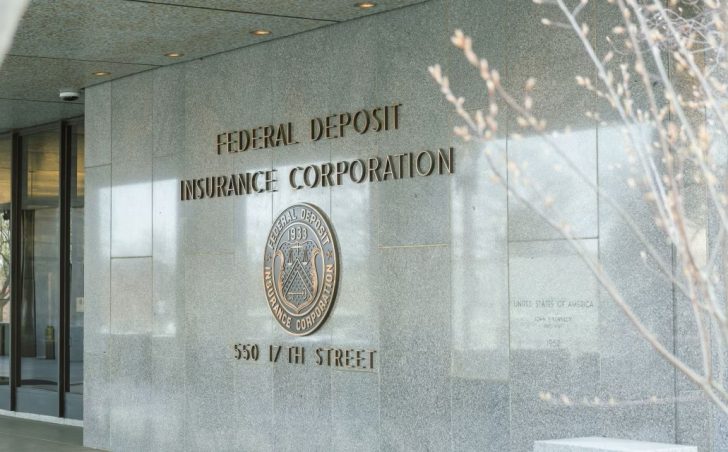
Eca / The state's Interchange Fee Prohibition Act, known as the IFPA, has raised questions about how state banking laws can affect financial institutions based elsewhere.
The Illinois law includes restrictions involving interchange fees on portions of card transactions covering taxes and gratuities. It also contains limits involving certain payment transaction data.
Banking groups challenged the law in federal court. The Office of the Comptroller of the Currency, which regulates national banks, also took action concerning how federal law applies to national banks affected by the Illinois measure.
The resulting legal fight exposed a difficult question for state-chartered banks. Banks operating in Illinois without an Illinois branch faced uncertainty over whether Section 24(j) gave them the same protection available to comparable national banks.
That uncertainty can carry a real financial cost. The FDIC notes that the Illinois law provides for civil penalties of $1,000 per electronic payment transaction for violations. Faced with that level of risk, banks could take defensive steps rather than wait for courts to settle every question. The FDIC said banks might consider rejecting payment card transactions in Illinois to reduce potential exposure.