
For years, the United Arab Emirates positioned itself as a stable business center in a region often shaped by political unrest and armed conflict. Cities such as Dubai and Abu Dhabi became magnets for global investors, luxury tourism, financial firms, and international conferences. That image is now under pressure as the ongoing Iran war reaches deeper into the Gulf.
The UAE, known for close ties with both the United States and Israel, has faced repeated missile and drone attacks from Iran during the conflict. The situation has exposed weaknesses in the country’s economic structure, especially its dependence on secure shipping routes, tourism, and foreign confidence.
Even with strong financial reserves, the longer the tension continues, the harder it becomes for the Emirates to preserve the image that helped fuel its rise as a global commercial center.
Growing Security Risks Across the Gulf
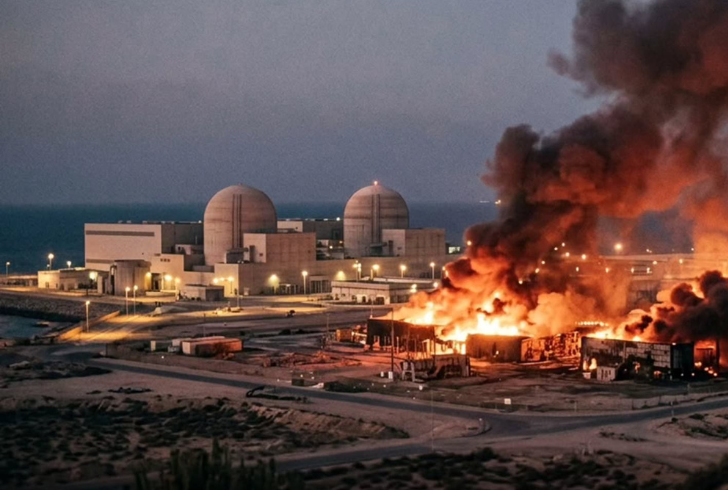
Instagram | onevisionmedia.in | Iran’s recent drone strike on the Barakah nuclear plant highlights the UAE’s high vulnerability to regional conflict.
The UAE sits directly across the Persian Gulf from Iran, making it highly exposed during regional conflict. Iranian attacks during the war have targeted several locations in the Emirates, including a recent drone strike on the Barakah nuclear power plant. Officials confirmed the attack caused no radiological leak and did not interrupt operations at the facility in western Abu Dhabi.
The incident still sent a strong signal across the region. It highlighted how quickly strategic infrastructure can become vulnerable during a wider geopolitical standoff.
The UAE’s Foreign Ministry responded with unusually direct language. Officials accused Iran of actions resembling piracy and terrorism while warning that the country reserved “full, sovereign, legitimate, diplomatic, and military rights” to answer any threats against its territory.
That sharper tone reflects a broader shift in Emirati foreign policy over the past two decades.
A More Assertive Foreign Policy
The UAE is a federation made up of seven hereditary-ruled emirates. Political power largely rests with Abu Dhabi’s ruler, Sheikh Mohammed bin Zayed Al Nahyan, whose leadership has shaped a more aggressive regional strategy.
The country played a role in the Yemen conflict against Iranian-backed Houthi forces. It also supported Egyptian President Abdel-Fattah el-Sissi during the 2013 political transition. The UAE has additionally faced accusations of supplying weapons to factions involved in the civil wars in Sudan and Libya, allegations Emirati authorities continue to deny.
Sheikh Mohammed rarely speaks publicly. During a hospital visit earlier this year to meet civilians injured in Iranian strikes, he delivered a short but pointed statement carried by state media.
“The UAE is attractive, the UAE is beautiful, the UAE is a model,” he said. “But do not be misled by the UAE’s appearance. The UAE has thick skin and bitter flesh; we are no easy prey.”
The message appeared aimed at showing resilience while also acknowledging the pressure the country now faces.
Strait of Hormuz Disruption Hits Energy Exports
One of the biggest economic shocks has come through the Strait of Hormuz, one of the world’s most important oil shipping lanes. Iran’s control over the narrow waterway has sharply reduced the UAE’s ability to export crude oil and natural gas.
Reports indicate Emirati exports have dropped by more than half during the conflict. Some tankers continue operating, but shipping activity remains limited and unpredictable.
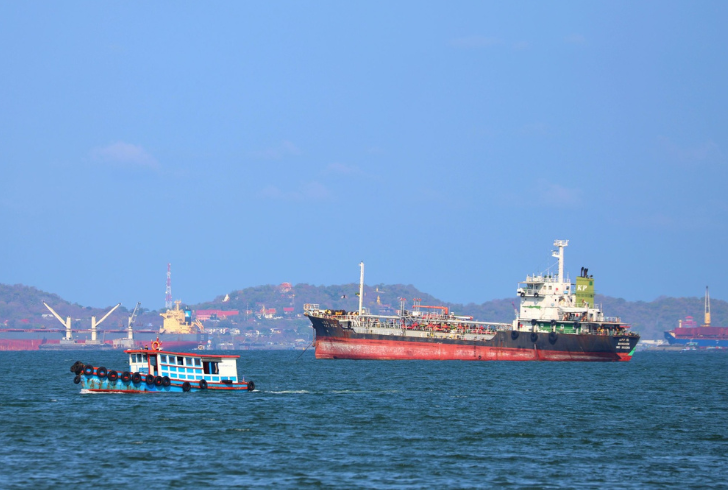
Instagram | somkanae_to_day | Iran's control over the crucial Strait of Hormuz has severely disrupted the UAE's oil and gas exports.
The UAE currently exports around 1.8 million barrels of crude oil daily through an existing pipeline linked to Fujairah on the Gulf of Oman, outside the Strait of Hormuz. Officials are now accelerating plans for a second pipeline that would double export capacity and reduce reliance on the vulnerable route.
The conflict also pushed the UAE to leave OPEC, a decision connected to long-term plans for increasing energy production. Discussions about stepping away from the oil cartel had already started before the war, though the current crisis intensified the urgency.
Tourism and Events Sector Under Pressure
Tourism has long served as one of the UAE’s strongest economic pillars. Luxury hotels, international exhibitions, sporting events, and conferences helped position the country as a nonstop destination for business and leisure travel.
That momentum has weakened since the war began on February 28.
According to Northbourne Advisory, more than 70 scheduled events across the Emirates have been canceled, delayed, or disrupted. The government did not formally ban gatherings, yet many organizers reportedly pulled back because of insurance concerns and growing liability risks.
Dubai International Airport, which remains one of the busiest airports in the world for international passengers, resumed most flight schedules in early May through Emirates airline. Yet the same day operations restarted at near-normal levels, Iran launched another round of drone and missile attacks across the Gulf.
Business leaders reportedly reacted with frustration as hopes for stability disappeared again.
Security concerns have also become more visible in public spaces. Reports suggest Dubai International Airport has started building protective structures around jet fuel storage tanks, although airport officials declined to comment on the project.
Hotels Face Sharp Decline in Occupancy
The hospitality sector has experienced some of the clearest financial warning signs.
Hotels across Dubai, including the sail-shaped Burj Al Arab, temporarily closed sections for renovations as visitor numbers dropped sharply. Occupancy rates reportedly fell from around 80% before the conflict to nearly 20%.
Moody’s Analytics estimates those numbers could slide to just 10% during the June quarter. Analysts also expect recovery to take time even after military activity slows, since many international travelers may continue viewing the Gulf as unstable.
The Institute of International Finance summarized the contrast inside the federation in a recent assessment. Analysts noted that Dubai’s openness leaves it highly exposed to disruptions in tourism, logistics, and investor confidence. Abu Dhabi, meanwhile, still holds substantial financial reserves and energy assets capable of softening the broader economic impact.
Art and Culture Continue Despite the Conflict

Instagram | this.is.dubai.official | Despite rising regional tensions, the UAE continues hosting cultural events that increasingly mirror themes of war.
Even as security concerns grow, the UAE continues trying to project normalcy through cultural events and public programming.
Dubai recently hosted a reduced version of its annual Art Dubai exhibition. The atmosphere carried clear reminders of the regional conflict. The event’s preview coincided with Iran’s seizure of a ship anchored near Fujairah.
Several artworks directly reflected themes tied to war, resources, and instability.
Spanish artist Solimán López presented a project focused on claiming ownership of a metal-rich asteroid targeted by a NASA mission. The installation explored how nations and corporations compete for valuable natural resources, including oil.
“But I said I have to do my best, because I do believe that it’s the perfect context to talk about this in the region,” López explained during the event.
Lebanese artist Alfred Tarazi connected the current tensions to the experiences of previous generations who lived through global wars.
“Life doesn’t stop in a world war,” Tarazi said. “We can only counter a narrative of violence with culture.”
The Iran conflict has placed growing pressure on the UAE’s economy and global reputation. Rising security threats, disrupted trade routes, and falling tourism have challenged the country’s image as a stable business hub in the Gulf.
Despite the setbacks, the UAE continues investing in energy infrastructure and economic stability while relying on Abu Dhabi’s financial strength to manage short-term pressure. The biggest challenge now is preserving international confidence as regional tensions continue near its borders.