
Military aviation rarely sees a machine that rewrites expectations overnight. Yet the McDonnell Douglas F-4 Phantom II did exactly that. From the moment it appeared, this fighter jet challenged assumptions about size, speed, and capability.
Instead of relying on sleek lines alone, it leaned on raw power, smart engineering, and relentless testing. As a result, the aircraft didn’t just enter service, it carved its name into record books and reshaped air combat thinking for decades.
During the late 1950s, most fighter designs focused on light frames and minimal drag. However, the F-4 Phantom II followed a very different path. Engineers accepted bulk and weight to gain strength, radar capacity, and payload flexibility. Because of that choice, the aircraft stood apart the instant it rolled out.
Between 1959 and 1962, the jet secured a staggering number of official world records. These achievements covered speed, altitude, and climb performance. According to historical aviation records, the Phantom claimed more than 20 global benchmarks during its early life. Even more impressive, many of those records stayed untouched for years.
Power Over Elegance
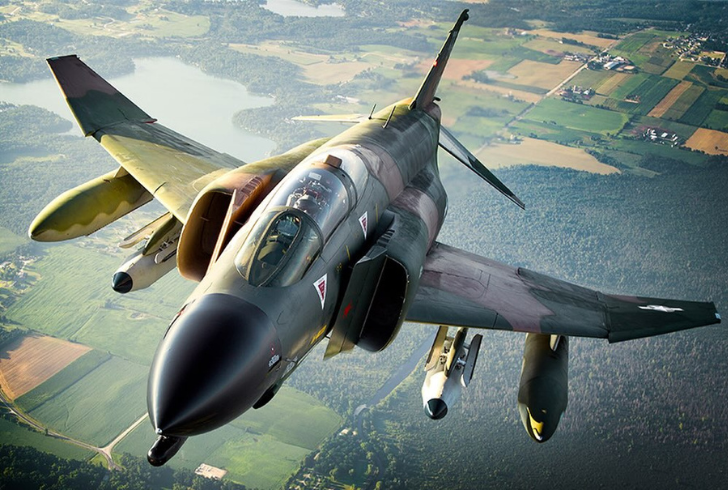
Instagram | @mikeyd710 | The F-4 Phantom II broke the rules of its time by using power and size to set over 20 world aviation records.
At first glance, the Phantom looked oversized compared to its peers. Nicknames like “Rhino” reflected that perception. Still, the size served a clear purpose. The aircraft carried a massive radar system, twin engines, and heavy weapon loads without compromise.
Key design realities shaped its success:
1. Two General Electric J79 engines pushed the aircraft past Mach 2.
2. The airframe supported a maximum takeoff weight near 60,000 pounds.
3. Payload capacity exceeded many smaller attack aircraft combined.
Because of these features, the Phantom could climb faster, fly higher, and carry more than expected. While rivals focused on agility alone, this jet delivered dominance through thrust and endurance.
Record Flights That Captured Attention
The Phantom’s record streak began with bold test programs backed by the U.S. Navy. In December 1959, one of the early prototypes climbed to nearly 100,000 feet. That flight alone broke an existing Soviet-held altitude record. Soon after, additional runs shattered benchmarks for sustained speed and time-to-climb.
Over the next few years, test crews pushed the aircraft even harder. Transcontinental flights crossed the United States in under three hours, including refueling stops. Average speeds during these runs stunned both allies and competitors.
Although some attempts ended tragically, the program continued. Later missions reclaimed lost records and added new ones. Notably, most achievements came from standard production aircraft rather than heavily modified versions. That fact highlighted the Phantom’s real-world strength, not just experimental potential.
Engineering Choices That Made Records Possible
Behind every record stood a series of calculated design decisions. McDonnell Douglas adopted solutions that balanced extreme speed with operational safety.
Several innovations stood out:
1. Extensive titanium use protected the structure from heat stress at supersonic speeds.
2. Boundary Layer Control systems increased lift during carrier landings.
3. Angled stabilizers improved control during aggressive maneuvers.
4. Wing modifications reduced instability without full redesigns.
Additionally, advanced intake systems managed airflow at high speeds. These components adjusted automatically, ensuring the engines received stable air even near Mach limits. Together, these features allowed consistent performance under intense conditions.
From Test Charts to Combat Reality
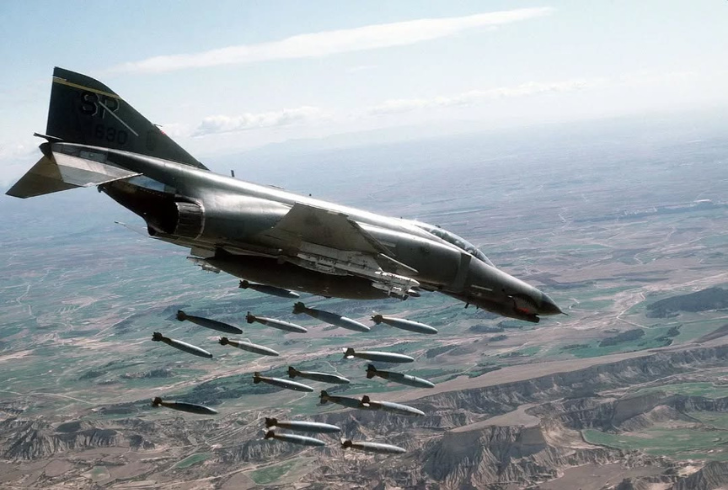
Instagram | @airfighters | Real combat proved the F-4 Phantom II’s speed and power helped pilots survive and win in tough, close-range battles.
While record flights proved capability, real combat tested adaptability. During the Vietnam War, the Phantom faced challenges that record books never predicted. Dense airspace, close-range engagements, and unpredictable threats demanded flexibility.
Despite those pressures, the aircraft delivered clear advantages. Massive thrust allowed rapid engagement and disengagement. Pilots relied on speed to control encounters, a mindset summarized by a simple belief: speed preserved survival.
The Phantom also carried heavy weapon loads across long distances. That versatility supported both air superiority and ground attack roles. As tactics evolved, later variants added internal cannons to complement missile systems, responding directly to combat feedback.
Lessons Learned From Early Limitations
Early versions depended entirely on missile technology. Unfortunately, those systems struggled in certain environments. Heat, humidity, and close-range combat exposed weaknesses. As a result, designers adjusted future models rather than abandoning the platform.
The F-4E variant introduced an internal cannon, restoring effectiveness in dogfights. That update demonstrated the aircraft’s adaptability. Instead of rigid design thinking, the Phantom evolved with operational needs.
Although engine smoke sometimes revealed its position, pilots learned to compensate through tactics and teamwork. Over time, these lessons strengthened training programs and influenced future fighter development.
Influence on Future Fighter Design
The Phantom’s success extended far beyond its own service life. Engineers studied its strengths and shortcomings when developing next-generation aircraft. Features like radar integration, multirole capability, and engine power shaped later designs.
Fighters such as the F-15 Eagle and F/A-18 Hornet benefited directly from lessons learned through Phantom operations. The idea of combining speed, payload, and advanced sensors became standard rather than experimental.
Moreover, the aircraft’s role across multiple military branches set a precedent. Shared platforms improved logistics, training, and mission coordination. That approach remains common in modern defense planning.
A Legacy Written in Speed and Adaptation

Instagram | @hollomanafb | The F-4 Phantom II left a lasting mark by proving that smart design and raw power can change aviation forever.
More than numbers define the Phantom’s legacy. While world records drew attention, its lasting impact came from influencing strategy and aircraft design. It proved that power, combined with smart engineering, could push beyond traditional limits.
Decades later, aviation historians still cite its achievements, and museums preserve surviving airframes as symbols of ambition and innovation. Modern fighter jets rely on stealth, sensors, and networked warfare, but many foundational ideas trace back to the Phantom era. The balance between raw performance and adaptability started there.
The F-4 Phantom II reminds us that progress often comes from challenging assumptions rather than refining comfort zones. Innovation thrives when engineers take risks and rethink limitations. Through power, persistence, and constant refinement, this fighter jet secured a place in history far beyond its records.